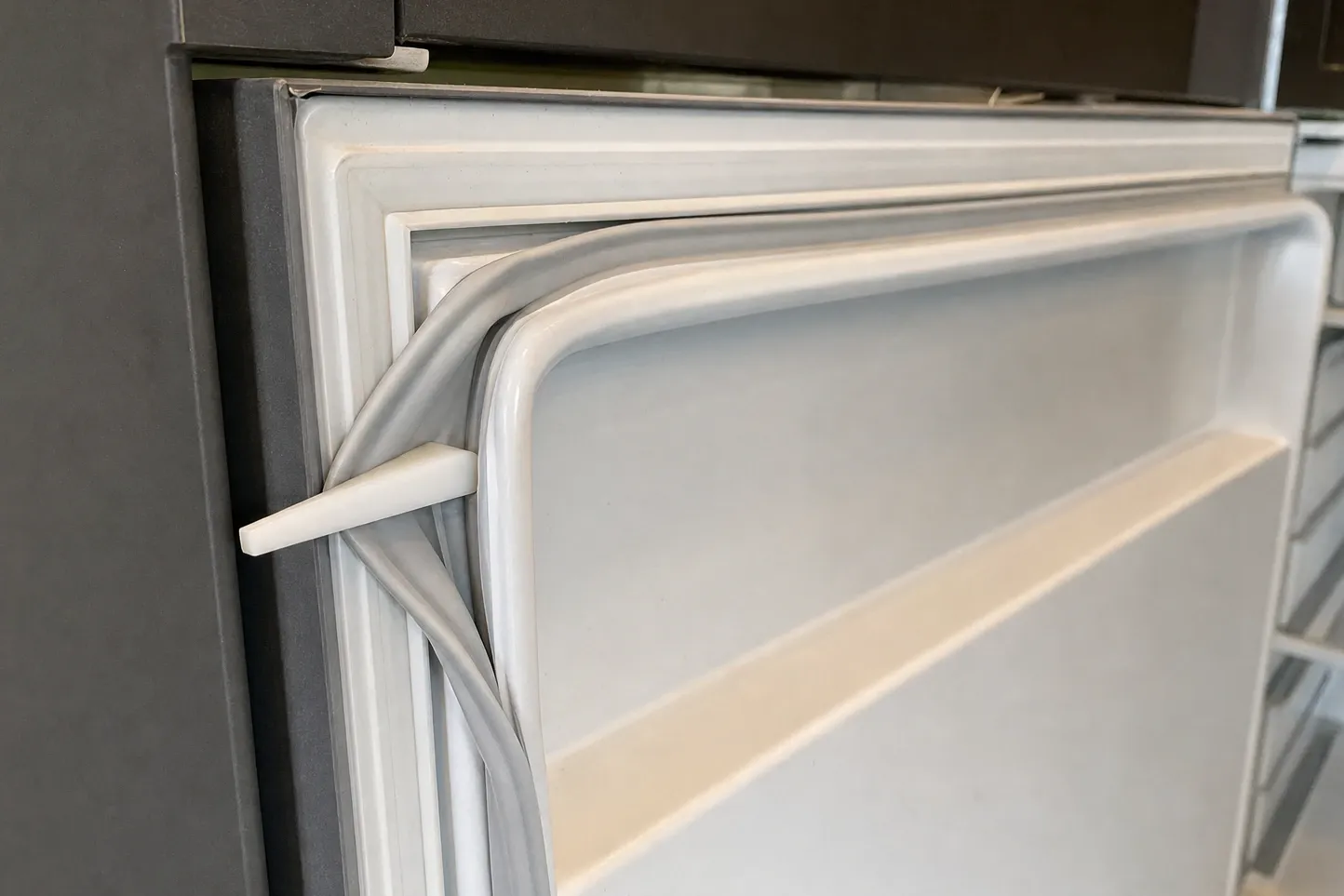
The repair against the replacement
| What it takes | Range |
|---|---|
| Compressor or sealed-system repair | $1,510–$3,440 |
| Buying another one instead | $12,710–$21,440 |
That last row buys a like-for-like built-in on its own, with nothing allowed for fitting it or for the joinery around it. Every figure above it is being weighed against that, which is why a structurally sound cabinet is usually worth putting right even when the quote makes you wince.
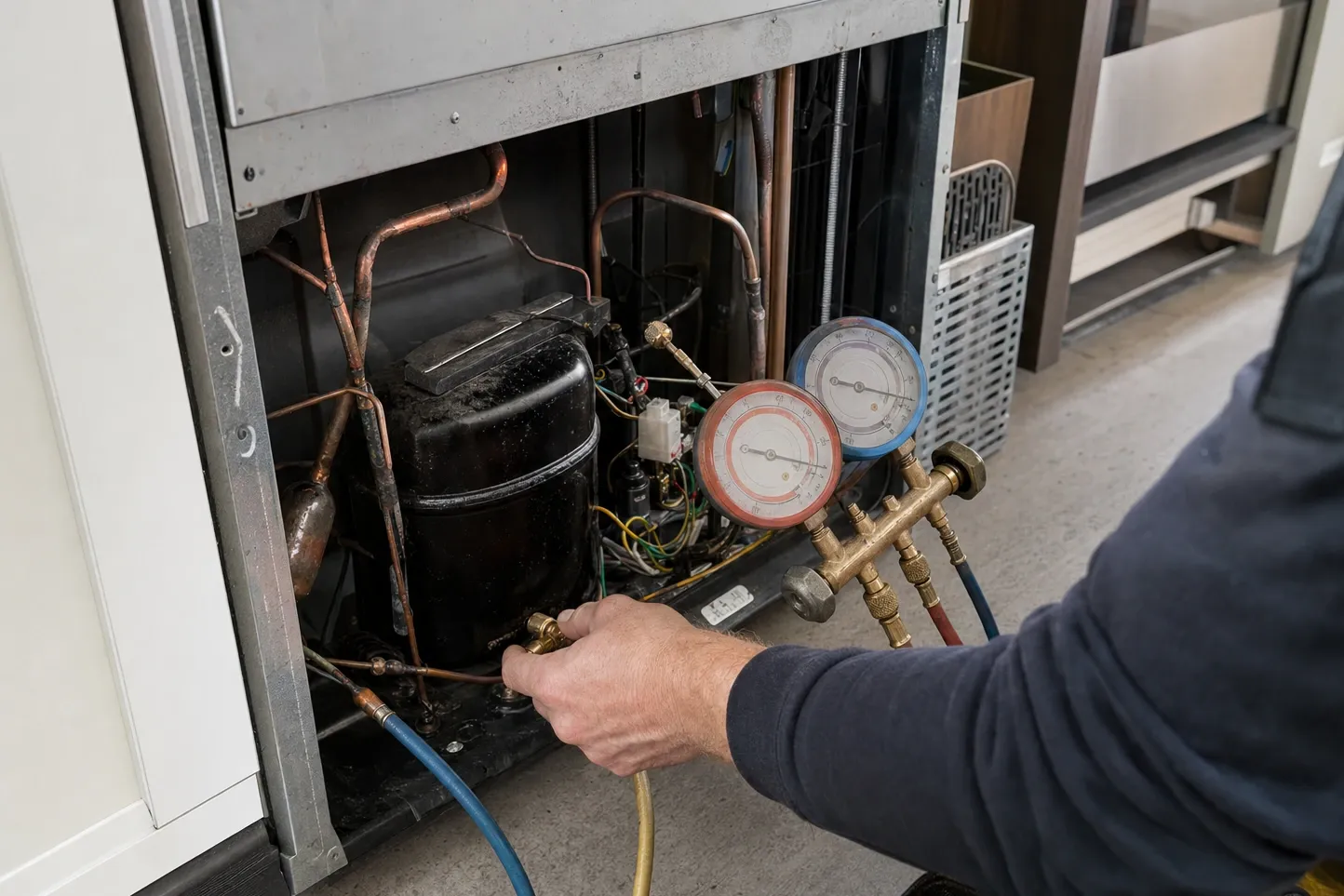
The pattern that brings this page up is a cabinet that behaved perfectly for a season and then went the same way as before, in the same compartment, for what sounds like the same reason. That repetition is the finding. A sealed circuit is not a wearing part; it is a closed loop that either holds what is in it or does not, and when one empties twice the second visit is really an inquiry into the first.
What a proper first repair leaves behind
Evidence. A located leak, a section of pipework repaired rather than topped up, a high-side filter-drier replaced — the manufacturer insists on that last one every single time the system is serviced — and pressures recorded afterwards on a machine running steadily. Where an invoice records a weight of refrigerant and nothing else, nothing was diagnosed, and the cabinet was always going to end up here.
Which circuit went is half the answer
On a combination built-in the refrigerator and the freezer are separate systems with their own pressures, which is why the manufacturer’s tables list two sets of figures for those models and one for the single-compartment columns. A freezer failure followed by a refrigerator failure is two first-time events on hardware that has nothing in common but the box. The same compartment twice is the case this page is about.
What the reading says before the decision does
Pressures are read together, never singly. Low on both sides indicates a leak; low against high points at a restriction; high against low says the compressor is no longer doing its work; high on both is an overcharge. Each of those has a different consequence for a machine of this age, and the difference between them is why the same quote can be sensible on one cabinet and a waste on the next.
The condition that decides it
Where the loss is, and whether anybody ever found it. Reachable pipework on a sound cabinet is worth repairing a second time, and the figures above say so plainly. A leak inside the foamed wall, on a circuit already opened once, is the version of this where a new machine stops being the extravagant option.
What we usually find
-
The same compartment warm again a year or two after the circuit behind it was repaired
A loss that was refilled rather than found. Where a charge disappears twice from one circuit, the interesting question is what the first visit actually located.
Compressor or sealed-system repair $1,510–$3,440
-
A combination cabinet that lost its freezer side once and has now lost the refrigerator side
Two separate circuits, two separate histories. On these machines the compartments share a shell and little else, so the second event is a first failure on different hardware.
Compressor or sealed-system repair $1,510–$3,440
-
Paperwork from the earlier visit that names a weight of refrigerant and nothing else
A recharge without a diagnosis. Nothing on that invoice says where the loss was, which is why the cabinet is warm again and why the same conversation is happening twice.
Compressor or sealed-system repair $1,510–$3,440
-
A repeat quote for a compressor on a machine whose condenser has never been touched
Heat rejection wearing the blame. A cabinet that cannot shed heat runs endlessly and fails again after any repair, and the airflow behind the grille is measured long before the circuit is.
Evaporator or condenser fan motor $330–$750
Which of these it is gets settled at the visit, before a part is ordered — Sub-Zero Repair Pro Los Angeles, (310) 844-1973.
Which way it points
Repair it if
- The two events were on different circuits of a combination cabinet
- The first repair named a leak, replaced the filter-drier, and the invoice shows it
- The cabinet, doors and joinery are sound and the opening was built around this machine
- The condenser and its fan have never been measured on either occasion
Replace it if
- One circuit has now been opened twice and the loss is still unaccounted for
- The leaking section is the coil foamed into the cabinet wall rather than reachable pipe
- Water from the first failure has already been into the liner or the door foam
If your machine sits between the two columns, that is what the diagnosis is for: Sub-Zero Repair Pro Los Angeles measures it first and gives you the figure before any of it is committed to — (310) 844-1973.
Follow-ups
- Why does a second failure change the arithmetic so much?
- Because the first repair has already answered the cheap questions. A circuit opened once and repaired properly should hold; one that empties again is either leaking somewhere harder to reach or was never diagnosed at all. Sub-Zero Repair Pro Los Angeles measures both circuits before anyone talks about a replacement.
- What should I ask for from the earlier repair?
- The invoice, and specifically whether a leak was located and whether the filter-drier was changed. The manufacturer requires that drier to be replaced every time the system is serviced, so its absence tells you something. Bring those details to the visit on (310) 844-1973 and the second diagnosis starts further along.
- Written by
- Yuki Tanabe
- Role
- Refrigeration technician — controls and sensors
- In the trade
- 18 years in the trade